
Your nursing internship in Togo, with administrative support and local supervision
Hospitals and health centres in and around Lomé, a local supervisor and the paperwork your school needs. Board, lodging and airport pickup included.
✓ Agreement with your school · internship certificate · first chat by video
See the grid
contribution to costs, board and lodging
3 months
minimum, before departure, to apply
From 2 wks
or the length set by your school
Since 2015
volunteers and interns welcomed
On the ground, in pictures
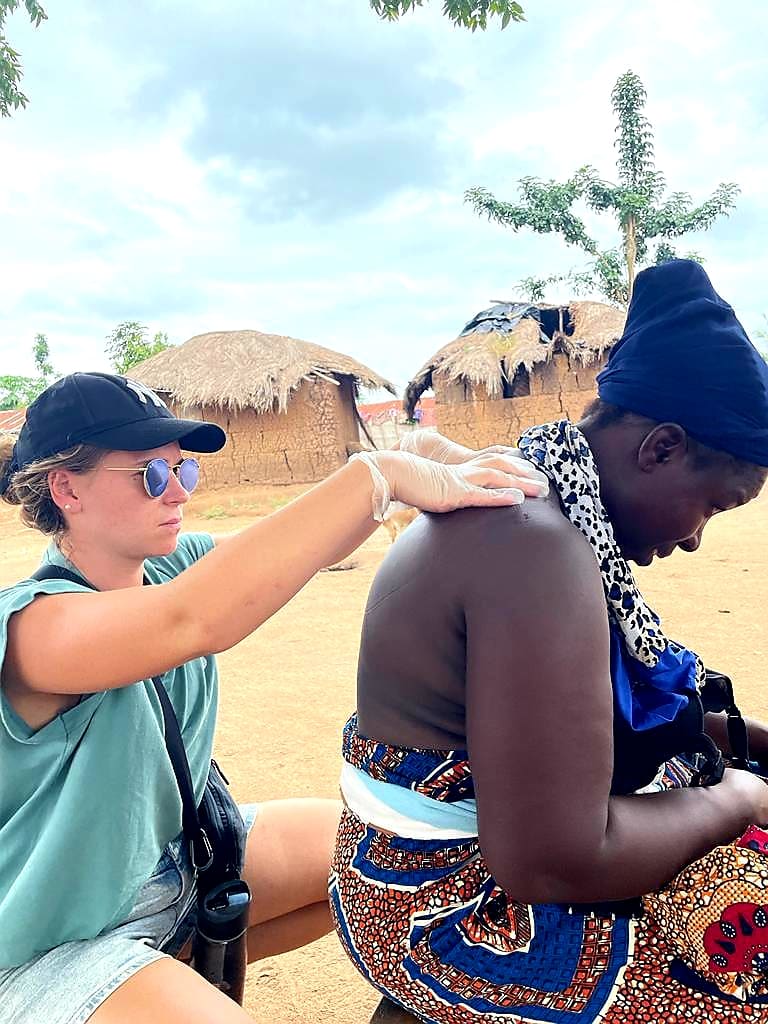
Bégbé, Togo 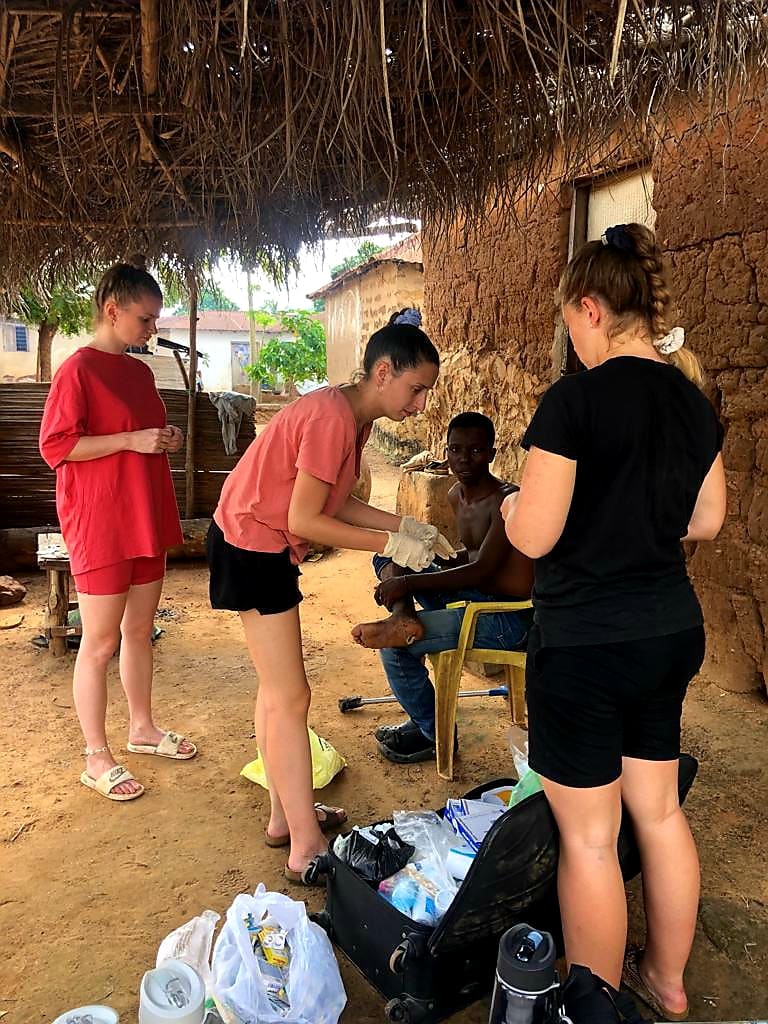
Bégbé, Togo · July 2022 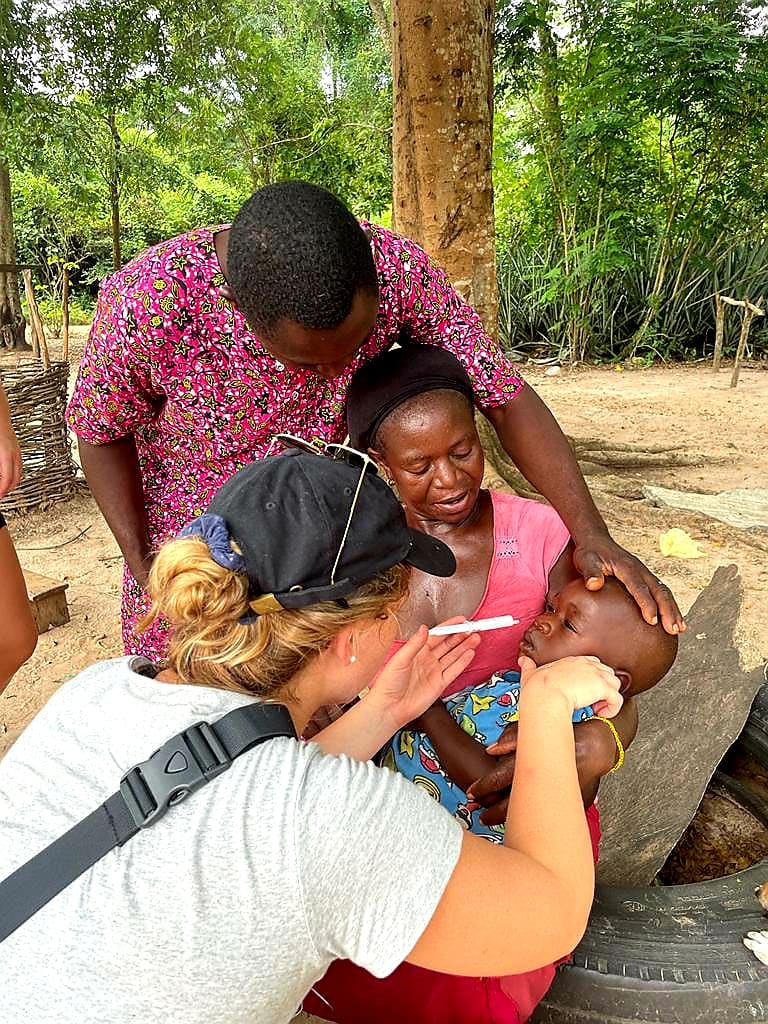
Bégbé, Togo · July 2023


Why do a nursing or healthcare internship in Togo
Because access to care should not depend on where you are born
Lack of resources and unequal access to care are an everyday reality: Alice describes them frankly in her internship story.
By learning alongside Togolese caregivers
You work with local teams, respecting their methods and your scope of practice as a student: an exchange, not “medical tourism”.
A supervised clinical placement, with an agreement
In a health centre (CMS Cacaveli) or hospital setting, with an agreement signed by your school and a certificate at the end.
What this placement will teach you (that no lecture hall can)
- What three weeks in internal medicine teach you when resources are scarce: blood samples, catheters, transfusions, burn dressings — Alice’s story.
- Why adapting to local methods, without giving up what you know, becomes one of the most valuable skills in a healthcare career.
- How to keep the right distance from suffering — and why life, loud and colourful, is present even in the corridors.
- Where community healthcare makes full sense: home care and the Davié Tekpo dispensary.
- How to present this placement to your panel or in an interview: autonomy, adaptability, care in low-resource settings.
- What this placement can change in the way you care for patients once you are back home.
Who is it for?
Students and recent graduates in healthcare who want to learn to care differently: with few resources and a lot of humanity.
Nursing students
Elective or final placement: you take part in the care on the ward, at the level of your year of study.
Midwifery students
Antenatal clinics, delivery room, newborn follow-up, depending on the services hosting you.
Physio and other fields
Physiotherapy, nursing assistants, medicine, pharmacy: each request is reviewed with the host facilities.
Recent graduates
A first international experience, valuable for your CV and for your practice.
Working language: French (Togo is French-speaking). Basic French makes daily life much easier; the local team helps with the rest.
What you will experience
You join the team of a hospital or health centre in or around Lomé (university hospitals, community health centres). Your ward is chosen with you, according to your training and local needs.
Everyday care
Blood samples, dressings, injections, monitoring, consultations: procedures at your level, under the responsibility of a Togolese professional.
Tropical medicine
Malaria, sickle cell disease, malnutrition, infectious diseases: conditions you only read about in Europe.
Prevention
Hand hygiene, malaria, mother and child health: sessions in schools and neighbourhoods with the Midezon team.
Caring with few resources
Limited equipment, families at the bedside: you learn adaptation, observation and patient relationships.
School agreement and internship certificate
Your internship counts towards your degree: we prepare every document your school asks for, with you.
- 1
You apply
Registration form, CV, cover letter and student card, at least 3 months before departure.
- 2
Your school approves
Present the project and your learning objectives to your placement or international office.
- 3
We find your placement
Midezon selects the host facility and the supervisor, then sends you a letter of acceptance.
- 4
The official request is sent
For a for-credit internship, your school’s director writes to Togo’s Ministry of Health at least 2 months before the start. We explain the procedure.
- 5
The agreement is signed
Send us your own documents (agreement, evaluation form, portfolio): we have them filled in and signed on site.
- 6
You come home with your certificate
Internship certificate (dates, ward, hours), evaluation signed by your supervisor and a short feedback survey.
Every school has its own forms and deadlines: send them when you register, it saves the most time.
Contribution to costs: what it covers, no surprises
The same contribution to costs as a mission (see the grid below). It covers the expenses incurred for you before departure and on site; travel is at your own expense.
| Length | Mission or internship | Work camp |
|---|---|---|
| 1 week | 125 € | 130 € |
| 2 weeks | 200 € | 210 € |
| 3 weeks | 275 € | 290 € |
| 4 weeks | 350 € | 370 € |
| 8 weeks | 650 € | — |
| 12 weeks | 950 € | — |
Registration €50 ; staff support mission / health internship: €75 per week ; work camp: €80 per week
What your participation covers
- Preparation of your mission, and an accommodation certificate for your visa application
- Pick-up at Lomé airport and transfer to your accommodation, on arrival and departure
- Accommodation in the Midezon House (shared rooms)
- Three meals a day at the mission site, and bottled water
- Support from a mission coordinator and the local team
- Lomé discovery day, welcome and farewell parties
- Someone to take you to hospital if you fall ill
- Mission attestation, issued on request
Not included
- Flights, visa and passport
- Vaccinations and malaria prevention
- Travel and repatriation insurance
- Any medical or hospital costs
- Daily trips (motorbike taxi) and personal transport
- SIM card and data plan
- Excursions and outings (including the volunteer guide’s costs)
- Meals away from the mission site, personal spending and souvenirs
The €50 registration fee is paid once and is non-refundable.
For departures from 1 January 2027: new contribution.
Our contribution had not changed since 2015. Since then, the cost of living in Togo has risen sharply: minimum wage +50% (2023), petrol +31% since 2022, electricity +12.5% (2025). This update lets us keep welcoming you well and fund our projects on the ground.
Registration €90 ; staff support mission / health internship: €375 flat for 1 to 3 weeks, then €75 per week ; work camp: €375 flat for 1 to 3 weeks, then €80 per week.
Where your contribution goes
Your contribution to costs does not buy a stay: it covers the expenses incurred for you, before and during your time in Togo. Whatever is left at the end funds local projects.
Before your stay
Your file and the paperwork: exchanges with the team, the accommodation certificate for your visa application, the letter of acceptance and the documents your school asks for an internship.
During your stay
Accommodation, three meals a day, water and electricity in the house, supervision by a coordinator and the local team, local transport organised by the team for the mission (airport pick-up included).
At the end of your stay
If anything is left, it funds local projects, for example after-school tutoring: chalk, school supplies, repairing desks.
A contribution to costs is not a donation: it never entitles you to a tax receipt. How contributions are used →
Upcoming departures
Internships run all year round, on the dates set by your school. Group departures show their remaining places in real time.
→
Spring health internship at the Sanguera health centre (April-May 2027)
📍 Sanguera
6 places leftApply for the 12 April 2027 departure
You can come whenever suits you: write to us or sign up, and we will prepare the ground for you. Write to us · Sign up
Preparing a nursing internship in Togo: visa, vaccines, health
A healthcare placement abroad also means preparing as a traveller. Here are the essentials, from the official sources listed at the bottom of the page; the travel guide covers each point in detail.
E-visa required
Apply online on voyage.gouv.tg at least 5 days before departure (aim for 3–4 weeks). Visas are issued for 15, 30 or 90 days; your passport must be valid 6 months after your return.
Yellow fever
The only compulsory vaccine: the certificate is checked on arrival. Get it at an approved centre at least 10 days before departure.
Malaria
Present all year round: preventive treatment on prescription, repellent, long sleeves in the evening and a mosquito net, on the ward as in daily life.
Health and repatriation insurance
Essential: any medical costs are yours to pay. If you fall ill, a team member takes you to hospital.
An ethical internship, not “medical tourism”
- You only perform procedures at your level of training, as at home, under supervision.
- You learn as much as you give: listening, humility, respect for Togolese colleagues.
- No photos of patients without their consent, and never on social media.
- Neat clothing: scrubs, closed shoes, hair tied back. Remember to pack them.
- Small supplies in your luggage (gloves, compresses, thermometers) are welcome; no medicines without prior agreement.
- Your story when you return helps future interns prepare.
Alice, three weeks at the university hospital
On an internal medicine ward, Alice took blood samples, placed IV lines, assisted with transfusions and changed dressings. She remembers the lack of resources, the need to adapt to local methods, and life everywhere, right into the hospital corridors.
Nursing internship in Togo: frequently asked questions
Will my school recognise my internship in Togo?
Yes, if it is covered by an agreement signed by your school. We provide the letter of acceptance, have your documents signed on site and give you an internship certificate and your supervisor’s evaluation.
How much does a nursing internship in Togo cost?
Contribution to costs: see this page’s grid (registration included), with accommodation, three meals a day and airport pickup. It is not a donation and does not entitle you to a tax receipt. Add your flight, visa, vaccines and insurance: our budget simulator works out the total.
When should I apply?
At least 3 months before departure. For a for-credit internship, your school director’s letter to Togo’s Ministry of Health must be sent at least 2 months before the start.
Which vaccines do I need for a nursing internship in Togo?
Yellow fever vaccination is compulsory: the certificate is checked on arrival. Diphtheria-tetanus-polio, hepatitis A and B and typhoid are recommended, plus meningitis and rabies depending on the case; malaria prevention is taken on prescription. See a travel clinic 4 to 6 weeks before departure.
Do I need to speak French?
French is the official language and the working language in hospitals, so basic French is strongly recommended. Patients often speak Ewe or Mina: the local team translates.
Will I be on my own?
No. You live in the Midezon house with other volunteers; a local team welcomes you and follows you throughout your stay, and a supervisor guides you on your ward.
Can we come as a group of classmates?
Yes, it is even recommended: contact us to arrange shared dates and, where possible, different wards for each of you.
What about medical students?
Elective requests from medical students are reviewed case by case with the host facilities: write to us with your year of study and the specialty you are interested in.
Updated on
Ready to put on your scrubs?
Tell us your dates and your school: we will come back to you with a placement proposal and the list of documents.